
SANDRA WANG

QED001/002 Professional Practice & Inquiry
In this module, we were taught the importance as well as the skills of being purposefully reflective in our teaching practice in order to bring about continual self-improvement.
If we do not keep striving to better our teaching, and begin living in complacency, thinking we're "doing alright", this is where we will fail as educators.
As Indianapolis quarterback Peyton Manning said, “You have to decide: do you want to make things happen or do you want to watch things happen? It’s been my experience that most of the people who watch things happen are the ones who are usually wondering what just happened.” The best teachers are lifelong learners.
We also learned how to craft our own e-portfolio as a means of helping us record our reflection and inquiry processes, which results in this website right here.

QCI504 Music Theory for a Multi-Cultural Music Curriculum
Our Music Theory class was conducted by Dr. Hideaki Onishi, who studied Musicology and previously taught at the Yong Siew Toh Conservatory of Music. True to the title, we were exposed to both Western and non-Western notations of music. The Western notation of music was found to be very structured and required time to remember and master, while the non-Western variants of music tended to be more intuitive and easy to grasp, such as cipher notations or the notation in the image depicting polyrhythms, or more specifically, interlocking rhythms- "Kotekan" as they describe it in the Indonesian culture. It was very refreshing as it broadened our perspectives on the pantheon of ways that one can teach music theory. However, I do realise that the extent of the assimilation of this practice would vary from school to school- some schools would prefer sticking to the Western notation as a large majority of the world's idea of 'music theory' is that of the Western notation.
I especially enjoyed how Dr Onishi always incorporated "doing" into his lessons so that it was not just hours of writing rhythms and notes, but singing and clapping them as well. More "doing", and less "staring", is what I hope to incorporate in my lessons, to effectively engage my students.

QCI505 Skills 2 Playing & Conducting
Although the title states "Playing & Conducting", it was more about learning through Music & Movement. Paul Grosse (my favourite pedagogical lecturer!) taught us this module, and it was a module that our entire class dearly missed when it was over, because we always had fun in his module despite it being 3 hours of class from 8a.m.-11a.m. every Monday and Tuesday.
During the course of his module, we were supposed to write a 1-page reflection for 5 out of 6 of his lessons. I will include the last reflection below:
Paul introduced a significantly different way of “warming up” today- getting us to imagine a tennis ball, basketball, medicine ball etc. and then to imagine throwing it, passing it to one another, and even climbing inside of it and pushing it. I personally felt energized by the session, but I could see that some of my classmates were not engaged by this activity. It dawned on me that people are engaged if they feel some form of connection with the activity, which is largely determined by their prior experiences and/or exposure to similar activities. In this case, Paul was dealing with a group of students who were probably relatively not sporty, and would therefore not know objects such as a medicine ball, and maybe would not even be familiar with a basketball. However, I noticed that Paul was always creating a safe and supported environment such that people were not afraid to make mistakes, in the way that he really kept to his word when he said “there is no right or wrong”.
I enjoyed how Paul introduced the modern Gregorian chant while getting us to trace the balloon, as it allowed the music to seep into our minds and hearts before our filter of “what song is that?!” could color how we felt about the music. I have realized that this is a useful “trick” to expose students to music that they would otherwise be prejudiced against.
Next, we went into the poem “Bedtime”, where Paul asked volunteers to read and pick out what is important. I enjoyed listening to different people’s interpretations of the poem and how they attempted to be different from the others. Paul’s rendition of “Bedtime” was, as usual, very energetic, which somehow made us all more engaged. It really is true that when the teacher is energetic, the students are more inclined to listen and eager to carry out the activity as well! #tipsforteachers
Our task was to, in groups, determine the reading of the poem and then put instruments to it, and perform once with words, once without words (inner rhythm as a group). Paul again surprised us when he managed to get us all performing in a fluid manner (i.e. when one group ends, another begins), picking which groups to go after one another and titling the piece “Disintegration”. I am impressed at his ability to quickly pick up and piece different stimuli together to create works of art- hopefully, with experience, I will be able to do these things in the near future!
Next, we shared our ideas about how to teach various songs. In Paul’s class, I feel safe and supported and I will venture to try new ideas and not be afraid to share or make mistakes. This is an environment that I would also want to create in my class, and I need to be mindful of my biases that would prevent me from doing so.
The activity that I found particularly interesting today was “Look, my right-hand side is free- somebody, come and sit with me!” in 8, 6, 4, 7 and 5 counts. It seemed like an easy game but it actually trains precision of rhythm, which is really something that I have been looking to do for my students as some of them have imprecise rhythm. Because it is a game, it also makes use of peer-checking and I do not have to waste my effort telling each student that they are imprecise in their rhythm. Furthermore, it trains every student at once (as everyone is counting), and it is a great activity to train inner rhythm.
3 Expectations of My Takeaways From This Course:
-
A myriad of ways to keep students continually engaged and having fun WHILE learning- by keeping them on their feet, and by being engaged WITH them. That means not looking at lesson plans or hiding behind the computer, but being with them, getting them to move and think and not leave their brains at the door.
-
A keen understanding of what it takes to help students enjoy music and improvisation- by creating a safe and supportive environment so that they will not mind making mistakes and growing through them, and by my ENERGY!
-
How I can help my students grow in character through the medium of music lessons- by using teachable moments and being a model myself through doing what I say.
3 Things I Hope to Improve About Myself From This Course:
-
To be a better planner of lessons that will engage the children while they learn.
-
To be more like the kind of teacher students look to for advice, even though I am “just a music teacher”.
-
To have a greater belief in each individual and their potential for music.
The above statements are what I wrote at the beginning of the course, as well as what exactly I took away from it! I really think that this course surpassed my expectations, and I have fulfilled what I hoped to improve about myself from this course!
Thank you, Paul. You have truly been an inspiring teacher and I only hope I can be half of what you are. I will definitely miss classes with you even though it means having to wake up incredibly early!

QCI506 ICT & Music Education
In this Music Information & Communication Technology module, we learned how to use Garageband on both the computer as well as the hand-held devices (iPad/iPhone) largely through informal learning, and also reconstructed a piece of music using Sibelius, the music notation software.
In this day and age, where students are so familiar with using hand-held devices to play games, it may be reasonable to allow some form of informal learning with respect to letting them explore Garageband on their own, given an introductory lesson on what Garageband allows them to do. This autonomy would allow them to unleash their creativity in making digital music and increase their intrinsic motivation to learn and find out more, to create better music (or better-sounding pieces).

QCI507 Theory & Practice of Music Education I
In this module, we were given an overview of a few major international music education methods:
-
Dalcroze method (eurhythmics)
-
Kodály method
-
Orff Schulwerk
-
Suzuki method
... as well as informal learning by Lucy Green. It helped broaden our perspectives on the various methods available and how we could tap on them to improve on our lessons!

QCI508 Theory & Practice of Music Education II
After learning about the various methods MOE advocates in the teaching of music, we learned about the different instructional strategies music teachers can employ in the classroom. For example, we shared as a class on how to get the attention of the class when they are being noisy or doing group work. We also shared on ideas for routines that would help keep the class in line. We shared about how noise is not necessarily a bad thing, especially in a music class where 'noise' can indicate students are practising.
I enjoyed learning in this class because our lecturer, Mr Tok, was extremely approachable and despite having his own views and perspectives on certain topics such as personal preference of music genre, made it clear through both his words and actions that it was perfectly fine for us to have differing interests. As a student under his care, I feel that I am in a safe environment to share my opinions and ideas, because he will give thought to it and not cut me off.

QCI509 Repertoire Studies I
Repertoire Studies in Sem 1 was about European / Western / Classical Music, i.e. those by composers such as Mozart or Beethoven. From the start, I secretly dreaded those classes as I
1) personally never had any interest in classical music
2) had been made to play and memorise these tunes for the various grades of my ABRSM Piano Exams since I was in primary school
However, I knew I had to go through it, and since I had been trying to focus on the growth mindset, was determined to get through it and learn something.
Through her trial- i mean, classes-, I learned a few great lessons:
1. Just like how i dislike classical music, there might be students who dislike the genres of music that I love and seek to impart in my students, and LOVE classical music instead. By choosing not to expose myself to classical music and thus not gain any learning from it, I am choosing to deprive my students of a greater set of choices... and who am I to do so?
2. The technicalities of classical music (e.g. musical elements), though high, are structured and therefore a good avenue to teach students about things like dynamics, tone etc.
3. There is a certain excitement about getting to try out and use instruments available in the music room, even if the topic is on classical music.
4. Audrey's lessons can be FUN, TOO! Especially when creating soundscapes, which is essentially translating emotions to music.
Although Audrey was definitely a strict teacher (the only teacher who, when she asked a question, the class would be deadly silent in fear of saying the wrong thing), she was fair. And I could see that she tried her very best to be as unbiased as possible when dealing with us.

QLK501 Communication Skills for Teachers
January 01, 2020
This module was technically on Communication Skills for Teachers- while I learnt some very good pointers such as how and when to CC and to whom I should CC, how I should craft mails and when I need to craft letters (informative and persuasive types as spectrums rather than exclusives of each other) etc., the one thing that kept me going for all Ms Melanie's lessons (this module allowed us to miss some lessons but I did not do so) was her modelling of a teacher that I would aspire to be.
Her telling us of personal, humorous and inspiring stories helped bridge the gap- and so did her rather informal use of language- which she would use, and then POINT OUT her usage as "see? I speak like this, in a slightly informal way but still with good english, to you guys.", which really helped me see the importance of LANGUAGE to convey so much more than information.
She also gave us the opportunity to find her for feedback individually, and when I did so, she spent about 1hr talking to me even about things like my contract school, teaching in her personal capacity, her family, and gave me her email, telling me: "drop me an email ANYTIME you need help with anything", which left me feeling really touched and grateful, that a teacher would be so willing to go out of her way to help me anytime i needed help.
I would definitely want to be a teacher like her.

QCI510 Repertoire Studies II
January 01, 2020
Repertoire studies II taught me three things:
1- Keeping myself current as a musician (e.g. performing etc) is very beneficial to my passion and knowledge as a music teacher.
2- Our local music (e.g. XinYao) is incredibly well-written
3- Doing a performance together as a class is exhilarating

QED507 ICT for Meaningful Learning
January 01, 2020
This module was helpful because it was a good summation of the ICT tools offered to us. It was highly flipped-classroom learning style, which left most of us pretty disgruntled at first as we were intending to slack off. However, the tools our lecturer picked were straightforward and simple enough to use (i.e. we did not need scaffolding), which allowed me to experience successes as I found them useful even for my own learning. This increased my intrinsic motivation to explore more tools on my own.
QED509 Educational Psychology: Theories & Applications for Learning & Teaching
January 01, 2020
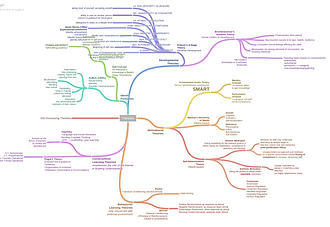
This was the educational module that I really learned the most from, and this was hands down my favourite educational lecturer. Through him, theories such as the Self-Determination Theory, Maslow's Hierarchy of Needs, Piaget's and Vygotsky's Learning Theories, Eriksen's 8-Stage Theory all came alive and leapt right off the pages as he brought us back into our memories with our students and how these theories could be applied practically to help them. Although prior to NIE I heard many of my PGDE friends saying that this module would be "useless", I think that because he brought meaning into these theories (due to his own passionate beliefs about them and in them), I was caught up and swept along by his infectious enthusiasm.
Personally, I especially love the motivational theories as I think my greatest concern with students (and even myself, or people in general) is on how an individual can develop intrinsic motivation. When I learned about the Self-Determination Theory, I immediately tried it out on my own life and realised that it actually works, to a large extent. Now, I am also using it to plan my activities so that the students will develop an intrinsic motivation toward Music, which is a non-examinable subject and thus often overlooked, but so important!

QED512 Assessing Learning & Performance
January 01, 2020
What's this item about? What makes it interesting? Write a catchy description to grab your audience's attention...

QED513 Group Endeavours in Service Learning
January 01, 2020
What's this item about? What makes it interesting? Write a catchy description to grab your audience's attention...